"What's your MOQ?"
It's the first question every new brand asks a factory. And it's often the first dealbreaker. You need 50 pieces. The factory says 300. Conversation over — or so it seems.
But MOQ is not a fixed wall. It's a calculation based on fabric minimums, production efficiency, and cost recovery. Understanding how it works gives you leverage to negotiate — or at least find a path forward that works for both sides.
What MOQ Actually Means
MOQ (Minimum Order Quantity) is the smallest number of units a factory will produce per style, per color, or per order. It's set to ensure the factory doesn't lose money on setup costs.
Setup costs include:
- Pattern making
- Grading
- Marker making (laying out pattern pieces on fabric for cutting)
- Fabric dyeing minimums (if your color isn't in stock)
- Trim sourcing minimums (zippers, buttons, labels)
- Machine setup and changeover time
Below a certain quantity, these fixed costs make the per-unit price unworkable for the factory.
How MOQ Is Calculated
The Fabric Constraint
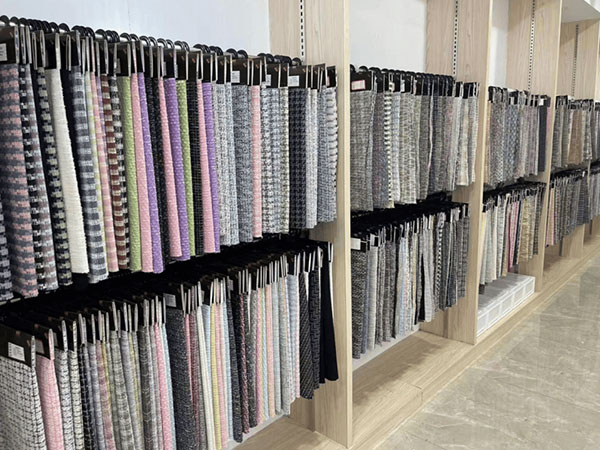
Fabric mills have their own MOQs. Common minimums:
- Stock fabric (ready color): 50–100 meters
- Custom dyeing: 200–500 meters per color
- Custom weaving/knitting: 500–1,000 meters
If your garment uses 2 meters of fabric and the mill minimum is 300 meters, you need 150 garments minimum just to use the fabric. This is the most common MOQ driver.
The Production Constraint
Factories optimize for efficiency. A production line set up for your style needs enough units to justify:
- Cutting time (spreading fabric, cutting layers)
- Machine setup (changing threads, adjusting tensions)
- Operator training on your specific garment
Below 50–100 pieces, the line changeover time costs more than the actual sewing.
The Trim Constraint
Trims often have minimums too:
- Custom woven labels: 500–1,000 pieces
- Custom hangtags: 1,000+ pieces
- Branded zippers (YKK custom): 500+ pieces
- Standard trims (generic zippers, buttons): lower minimums
Typical MOQ Ranges by Category
| Category | Typical MOQ (per style) | Notes |
|---|---|---|
| T-shirts / basic tops | 50–100 pcs | Easiest to do small runs |
| Dresses (unlined) | 100–200 pcs | Depends on fabric width/consumption |
| Dresses (lined / structured) | 150–300 pcs | More fabric = higher minimum |
| Trousers / bottoms | 100–200 pcs | Fabric length drives minimum |
| Jackets / outerwear | 200–500 pcs | Complex construction, more trims |
| Activewear | 100–200 pcs | Specialty fabric may have higher minimums |
| Knitwear (sweaters) | 50–150 pcs | Knitting machines have lower setup cost |
| Denim | 200–500 pcs | Washing/processing adds minimums |
How to Negotiate MOQ (6 Strategies That Actually Work)
1. Mix Colors and Sizes
Instead of 300 pieces in one color, ask for 100 black + 100 navy + 100 cream = 300 total. Many factories accept this because the production line runs continuously — only the fabric color changes.
2. Use Stock Fabric
If you choose a fabric that's already in stock (common colors, standard qualities), the fabric MOQ disappears. This is the single most effective way to lower overall MOQ.
3. Simplify the Design
Fewer pieces = less cutting time = lower setup cost. A simple dress with 4 pattern pieces costs less to set up than one with 12 pieces and 6 darts.
4. Accept a Development Run Premium
Some factories offer a "development run" at lower MOQ (e.g., 50 pcs instead of 300) at a higher per-unit price. This lets you test the market before committing to a full run.
5. Bundle Multiple Styles
"I have 3 styles, 100 pcs each — total 300 pcs. Can you do it?" Factories often say yes because total volume justifies setup.
6. Build a Relationship First
Your first order might be at standard MOQ. Your second order — after you've proven you're a real brand that pays on time — can often be negotiated down. Factories reward loyal clients.
What Factories Won't Tell You
- MOQ is sometimes flexible for the right client. If you're professional, responsive, and clear about your needs, a factory may bend.
- They'd rather say 300 than explain why 150 is possible but costs more. It's easier to state a number than have a 20-minute conversation about pricing tiers.
- Small runs go to the "flexible" line. Not every factory has one, but those that do keep a separate team/line for small-batch orders.
Red Flags to Watch For
- Factory claims MOQ of 20 pcs for complex garments. Either quality is compromised or they're outsourcing to a smaller workshop.
- No MOQ at all. Nobody can produce custom garments with zero minimum — there are always setup costs.
- MOQ drops dramatically after you hesitate. "OK OK, 50 pieces!" — this suggests the original number was arbitrary, not calculated.
Our MOQ Policy
At SESIY, our standard MOQ is 50 pieces per style, with flexibility to mix colors and sizes within that total. For first-time clients, we offer a development run option at 5 pieces per style (limited categories, higher per-unit cost).
We're transparent about what drives MOQ for your specific designs — fabric consumption, trim minimums, and construction complexity. If we can make it work at a lower quantity, we'll tell you. If we can't, we'll explain why and suggest alternatives.
What's Your MOQ?
Tell us your target quantity, styles, and fabric direction. We'll let you know if it's feasible — and if not, what your options are.
 Explained.jpg)