If you manufacture clothing in China, fabric sourcing is not a side task — it's the single biggest driver of your product's quality, cost, and lead time. And if you're producing in or near Guangzhou, you have access to the largest textile ecosystem in the world.
But "access" doesn't mean "easy." The fabric markets here are massive, chaotic, and operate almost entirely in Chinese. This guide explains how fabric sourcing actually works in Guangzhou — and how to do it without getting lost.
Why Guangzhou for Fabric?
- Scale: Zhongda Fabric Market (中大面料市场) alone has 10,000+ shops across dozens of buildings. It's the largest textile wholesale hub in Asia.
- Variety: From $0.50/m cotton to $50/m silk, from basic jersey to engineered jacquards — if it exists, it's here.
- Speed: Many fabrics are in stock and can be collected the same day. Custom dyeing takes 3–7 days for common colors.
- Proximity: Being next to fabric markets means faster development, easier re-sourcing if a fabric fails inspection, and lower logistics cost.
Key Fabric Markets in Guangzhou
Zhongda (中大) — The Main Hub
The largest and most comprehensive. Sub-markets include:
- Guangzhou International Textile City (GITC): Mid-to-high-end woven and knit fabrics, prints, embroidery.
- Changjiang (长江): Knit fabrics, jersey, French terry, fleece.
- Jiangnan (江南): Lace, mesh, trims, embellishments.
- Ruikang (瑞康): Denim and heavy fabrics.
- Jiuzhou (九州): Accessories, buttons, zippers, trims.
Other Notable Markets
- Shahe (沙河): Lower price point, fast fashion fabrics. Good for testing but quality varies.
- Baima (白马): More finished garments than fabrics, but useful for trend spotting.
How Fabric Sourcing Works (Step by Step)
Step 1: Define Your Fabric Direction
Before stepping into any market, you need clarity on:
- Composition (cotton, polyester, silk, blend?)
- Weight (GSM — light 80–120, mid 130–200, heavy 200+)
- Hand-feel (soft, crisp, drapey, structured, stretchy)
- Color direction (Pantone codes if possible)
- Budget per yard/meter
Step 2: Market Navigation
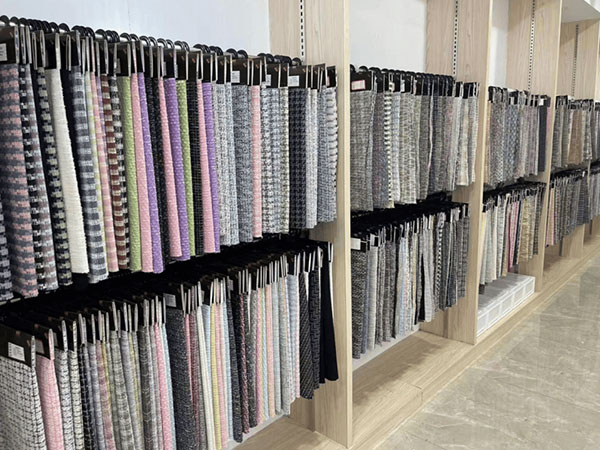
A fabric agent or sourcing team walks the markets with your spec, collecting swatches from multiple vendors. They compare:
- Quality (hand-feel, weave/dye consistency)
- Price (per meter, MOQ, dyeing minimum)
- Availability (in stock vs. custom production)
- Lead time (same-day collect vs. 7–14 days)
Step 3: Swatch Review
You receive physical swatches (usually 10cm × 10cm or larger). Evaluate:
- Hand-feel against your brand standard
- Color accuracy (check in daylight and indoor light)
- Drape (hang it, fold it, see how it falls)
- Weight (does it match the spec?)
Step 4: Lab Dip (If Custom Color)
If the color isn't in stock, the mill produces a lab dip — a small fabric sample dyed to your Pantone code.
- Timeline: 3–5 days
- Cost: Usually free if you proceed with bulk fabric order; $20–$50 if standalone
- Approval: Check under daylight (D65) and indoor light
Step 5: Bulk Fabric Order
Once swatch/lab dip is approved:
- Fabric is cut from the bolt (or dyed to order)
- Inspection: 4-point system for defects
- Delivered to factory for production
Common Fabric Sourcing Pitfalls
- Color variation between dye lots. Always order enough fabric for the entire production run from the same dye lot. If you need more later, it may not match.
- Shrinkage not tested. Fabric shrinks when washed. If the factory doesn't pre-shrink or account for shrinkage in cutting, your finished garments will come out smaller.
- Buying from the first shop. The first vendor you find is rarely the best price. Comparison shopping is essential.
- No fabric specification on file. Always record: vendor name, fabric code, composition, weight, width, color code. If you need to reorder, you need this data.
- Ignoring minimums. Many fabrics have a 50–100 meter minimum. If your order is small, you may pay for unused fabric.
Fabric Types and Where to Find Them in Guangzhou
| Fabric Type | Best Market Area | Price Range (USD/meter) |
|---|---|---|
| Cotton jersey / French terry | Changjiang | $2.50 – $6.00 |
| Cotton poplin / sateen | GITC | $3.00 – $7.00 |
| Linen / linen blend | GITC, Zhongda | $5.00 – $14.00 |
| Viscose / rayon (woven) | GITC | $4.00 – $9.00 |
| Silk / silk blend | GITC (specialty shops) | $12.00 – $30.00+ |
| Lace / mesh / tulle | Jiangnan | $3.00 – $15.00 |
| Denim | Ruikang | $4.00 – $12.00 |
| Activewear (poly-spandex) | Changjiang, GITC | $5.00 – $11.00 |
Sustainability and Certification
If your brand requires certified fabrics, Guangzhou has options — but you need to ask specifically:
- GOTS (Global Organic Textile Standard): Available for organic cotton and blends. Ask for certificate number.
- GRS (Global Recycled Standard): Recycled polyester, recycled nylon. Common in activewear.
- OEKO-TEX Standard 100: Confirms fabric is free from harmful substances. Many mills carry this.
- BCI (Better Cotton Initiative): Better cotton, not organic but improved practices.
Important: Always ask to see the actual certificate, not just a claim. Certificates have expiry dates and scope numbers.
How We Source Fabric
At SESIY, fabric sourcing is one of our core services. Our team is based in Guangzhou and walks the markets daily. We:
- Source to your specification (composition, weight, hand-feel, color, budget)
- Compare 3–5 options per fabric and present swatches with pricing
- Handle lab dips, bulk ordering, and fabric inspection
- Manage reorder tracking (same dye lot when possible)
- Offer fabric sourcing as a standalone service — even if you manufacture elsewhere
Need Fabric Sourced in Guangzhou?
Tell us what you're looking for — composition, weight, color direction, and budget. We'll send you swatch options within 5–7 days.
 Explained.jpg)