Brand profile: A London-based independent designer label specializing in premium silk and linen womenswear. 2 years in business. Previously self-managing all production through small local workshops. Revenue: £120K → £380K in 18 months after partnering with us.
The result: Production capacity increased 10× per style. Unit cost reduced 35%. Brand secured placement in 2 UK multi-brand boutiques. Founder reclaimed 60% of her time for design.
The Bottleneck: When "Handmade" Becomes a Ceiling
The designer launched her label making everything herself — cutting, sewing, finishing. Year one was 30 pieces total, all sold through Instagram. Year two, demand grew. She hired two seamstresses in London and outsourced cutting to a local workshop.
By month 18, she was producing 50 pieces per style, but hitting walls:
- Fabric inconsistency: Buying silk from multiple UK suppliers meant color and hand-feel varied batch to batch. Customers noticed.
- Production capacity: 50 pcs/style max. She was turning away wholesale orders from boutiques asking for 100+ per style.
- Time drain: 70% of her week was production management, 30% design. The wrong ratio for brand growth.
- Cost: UK labor at £15–£20/hour meant her unit cost was 3× what it could be in a properly equipped facility.
- Quality variation: Different seamstresses produced slightly different results. Not a problem at 20 pcs, but at 100+ it became visible.
What "Full Support" Actually Means
She didn't need a factory. She needed a supply chain partner. Here's what that looked like:
Phase 1: Fabric Standardization (Month 1)
We audited her existing fabric sources and consolidated:
- 5 previously used silk qualities → locked to 3 consistent suppliers in Guangzhou and Suzhou
- Created a permanent color card (Pantone TCX codes) for her signature shades
- Established reorder protocol: same dye lot tracking, 5% over-order for cutting waste
- Result: Color consistency from batch to batch went from ±2.0 Pantone to ±0.5 Pantone
Phase 2: Process Documentation (Month 2)
Her "production process" was in her head and her seamstresses' hands. We documented it:
- Every style got a formal tech pack (she'd been working from hand-drawn sketches)
- Construction SOPs: seam types, stitch specs, finishing methods, pressing standards
- Quality checklist per style (what to check at each stage)
- Packaging spec: branded tissue, hangtag placement, polybag type
This was the hardest part — translating tacit knowledge into explicit instructions. Took 3 weeks of back-and-forth.
Phase 3: Production Transition (Month 3–4)
We didn't move everything at once. Phased approach:
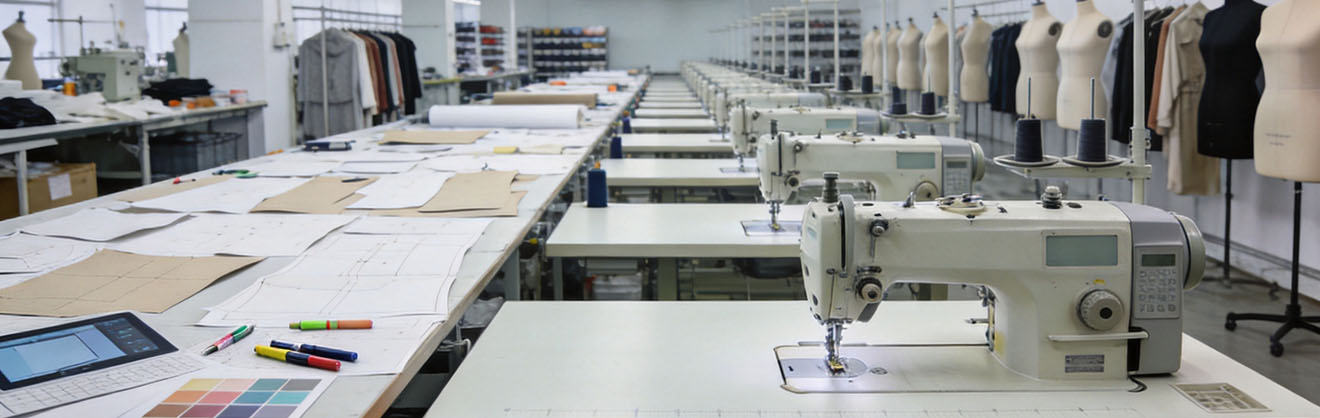
- Core styles (3 styles, 200 pcs each): Moved to our Guangzhou facility. These were her bestsellers, highest volume, most standardized.
- Experimental styles (2 styles, 50 pcs each): Kept with her London seamstresses. These were design explorations, low volume, high variation.
- Hybrid: She designed and sampled in London; we produced bulk in Guangzhou; finished goods shipped to her London studio for final QC and dispatch.
Phase 4: Scaling (Month 5–18)
- Core style volume increased: 200 → 300 → 500 pcs/style over 4 production cycles
- 2 new styles added per season, going straight to bulk (no more small-workshop testing)
- Development cycle compressed: from 6 months to 3.5 months per collection
- Annual collection count: 2 seasons → 3 seasons
The Numbers
| Metric | Before (Self-Managed) | After (Full Support) | Change |
|---|---|---|---|
| Max units per style | 50 | 500 | +900% |
| Unit production cost | £48 | £31 | -35% |
| Annual revenue | £120K | £380K | +217% |
| Time spent on production | 70% | 10% | -60% (reclaimed) |
| Wholesale accounts | 0 | 2 boutiques | New channel |
| Collection cycle | 6 months | 3.5 months | -42% faster |
What Changed for the Designer
The most meaningful shift wasn't financial — it was where her time and energy went:
- Design time: From 30% to 80% of her week. She launched a capsule collection she'd been "planning for 2 years" within 3 months of partnering with us.
- Brand positioning: Consistent quality and reliable delivery enabled her to approach wholesale buyers with confidence. Two boutiques placed orders — something she'd been rejected for previously due to inability to guarantee supply.
- Mental load: "I sleep through the night now. Before, I'd wake up at 3am worrying about whether a seamstress called in sick or if a fabric shipment arrived."
What the Designer Said
"I thought going to a factory meant losing control of my designs. It's the opposite. By documenting my process and letting professionals handle production, my designs are executed exactly as I intend — every time. And I finally have time to design."
Key Takeaway for Designers Ready to Scale
- Document before you delegate. The more clearly you can describe your process, the better a factory can execute it. If it's only in your head, it can't scale.
- You don't have to move everything at once. Start with your bestsellers. Keep experimental pieces local. Transition gradually.
- Fabric consistency is a brand asset. Customers remember if the "same" dress looks different each time. Lock your suppliers.
- Your time has an opportunity cost. Every hour you spend managing production is an hour not spent designing, marketing, or selling. At a certain point, doing it yourself costs more than outsourcing.
Ready to Scale Without Losing Your Signature?
Tell us about your current production setup and where you're stuck. We'll show you what a phased transition looks like for your brand.